The Skinny on Sugar
29 November 2024
What is histamine?
Histamine is a hormone or chemical messenger released in response to important processes in the body, involving temperature regulation, lung, and digestive function, as well as nervous system and sleep.
Histamine also affects mood, memory, motivation, and learning.
Histamine control in the body becomes dysregulated with continuous inflammation and can be challenging to manage in many autoimmune diseases.
What triggers histamine dysregulation?
Our bodies operate on a feedback system via chemical messengers in our hormonal system. These messengers alert our immune system of excessive or foreign proteins in our bodies.
Allergens and environmental triggers (like pollens, dust mites, and animal hair) and dietary triggers (like peanuts, seafood and dairy foods) can set off such an alert, causing the body to release histamine in response.
The excess histamine can cause irritated eyes and sinus reactions or itching and inflammation of skin and mucus membranes, including digestive membranes.
What is the common approach to histamine dysregulation?
Antihistamine medications (off the shelf or prescribed) are the most common approach. They will temporarily block the hormonal trigger-process in the body, but they will not reduce or clear any histamines already present.
Antihistamines are useful in calming acute reactions to allergens, such as skin rashes or wheezing. Antihistamines are not very effective in treating chronic (long term) exposure to allergens from the diet or environment, where the trigger has not been addressed or removed.
The best way to reduce allergic reactions is to identify and avoid the allergens as much as possible. It is also beneficial to reduce the histamine load on the body by following a low histamine diet.
What are high histamine foods?
Foods high in certain plant chemicals (phytochemicals) may increase histamine in the body.
Histamine will also be released by the body in response to a food if an individual is allergic to it (IgE-mediated allergy) or intolerant to it (IgG-mediated allergy).
What can be done to lower histamine levels in the diet?
The list of fruits and vegetables containing histamine and other amines is extensive and therefore not advised to eliminate entirely.
Health benefits of fruits and vegetables as well as cooking methods to reduce histamines in these foods must be considered.
At Auckland Skin Clinic we like to take an integrated approach, based on research and common sense wherever we are not dealing with a more serious IgE allergic response to foods.
Only 10% of New Zealand’s adults are eating the recommended five servings of vegetables a day (Ministry of Health, 20221). Less than half of all New Zealand children meet the combined daily fruit and vegetable recommendation as set by the Ministry of Health (20222).
Histamine Intolerance (HIT) – what is it?
HIT is the term for food intolerance symptoms resulting from accumulated or ingested histamine from the diet.
In some foods such as spinach, cooking or blanching alone will reduce histamine levels substantially - as much as 83% (Hrubrisko et al., 2021).
Alcohol and several medications can interfere with the enzyme responsible for histamine metabolism in the body. Toxic effects and accumulation of histamine in the body might therefore be enhanced by alcohol consumption and some prescription drugs (Sánchez-Pérez S et al, 2021).
Histamine – is it all bad?
Histamine is an essential hormone in the body so we’re not trying to eliminate it. However, if you have a high histamine condition like eczema, psoriasis, hayfever, allergic rhinitis, or asthma, you will need to temporarily reduce some specific foods from your diet to help bring the inflammation down.
Once the skin improves and allergy symptoms subside, histamine triggering foods can be eaten more frequently again, ideally if currently in season. Seasonal eating reduces the accumulation of histamine in the body.
Research-based low histamine diets
There is a lot of disparity between low histamine diets prescribed by nutritionists worldwide. A literature review conducted in 2021 aimed to determine whether the historic exclusion of foods was justified by their histamine content (Sánchez-Pérez S et al, 2021). Some of the foods tested were low in histamine but high in other biogenic amines, justifying their exclusion.
Another study examined the salicylate content of 112 food products available on the European market (Kęszycka, Szkop, and Gajewska, 2017). Not all foods are represented in either study, but it is the most current research published in the field and is what we have based our current Dietary Guidelines on at Auckland Skin Clinic.
The research shows that histamine content varies in fermented foods, depending on the manufacturing processes, hygiene practices, and ageing.
Though beer and wine are low in histamine, the presence of alcohol enhances the toxic effects and accumulation of histamine in the body (Sánchez-Pérez S et al, 2021).
Citrus fruit is low in histamine, but relatively high in putrescine, which inhibits the DAO enzyme required to break down histamine in the body (Sánchez-Pérez S et al, 2021).
Highest Amine & Salicylate Foods
- Sausages, salami, cured/smoked meats, processed meats like ham, bacon, nuggets, burgers etc.
- Smoked fish, canned fish like tuna, mackerel, sardines, anchovies; processed fish products like crumbed frozen fillets, fish burgers etc.
- Cured/hard and aged cheeses like cheddar, parmesan, blue cheese, brie etc.
- Sauerkraut, kimchi; soy-derivatives like tempeh, tofu, natto, miso, lecithin, soybean paste, soy sauce; red pepper paste, fish sauce
- Yeast as present in bread, vegemite, marmite, yeast flakes, stock powders and pastes
- Alcohol especially wine, beer and cider
- All vinegars including apple cider vinegar
- Olives in brine, sundried tomatoes, pickles, gherkins
- All canned fruits and vegetables
- Canned tomatoes, tomato paste, tomato sauce, tomato juice
- All dried spices and sauces made from fresh spices - curry pastes, sauces and powders, chilli pepper, chilli sauces, black and white pepper
- Dried mushrooms, dried vegetables, processed potato products like fries, potato chips, instant mash, hash browns, croquettes etc.
- High amine fruits - all dried fruit, canned or bottled fruit, jam
- High salicylate fruits - watermelon, plums, all berries like strawberries, blueberries, raspberries, gooseberries
- Buckwheat, soy flour, corn flour, brown rice, white rice
Medium Amine & Salicylate Foods:
- Fish/seafood* that is not very fresh – histamine increases with age
- Meat that is not very fresh – histamine increases with age
- Eggs* that are not very fresh - histamine increases with age
- Nut butters*, nuts* that are not very fresh (refrigerate)
- Bananas - low in histamine, relatively high in putrescine
- Medium amine fruits – citrus fruit like oranges, mandarins, grapefruit, lemons, limes; red grapes, pineapple, papaya
- Medium salicylate fruits – citrus fruit, stone fruit like apricots, peaches, nectarines, cherries, (plums are high salicylate)
- Medium amine vegetables - Eggplant, courgette, raw spinach, peas, green capsicums, sweetcorn
- Medium salicylate vegetables - raw cauliflower, celery, beetroot, green and yellow beans, broccoli, celery, lentils, split peas, green capsicums, spinach, tomato
- Dairy*: Cow’s milk powder, baby’s formula powders, cottage cheese
- Black tea, green tea, coffee, peppermint tea, raspberry tea
- Honey
- Oats
*Will increase histamine significantly in those who are allergic to this food
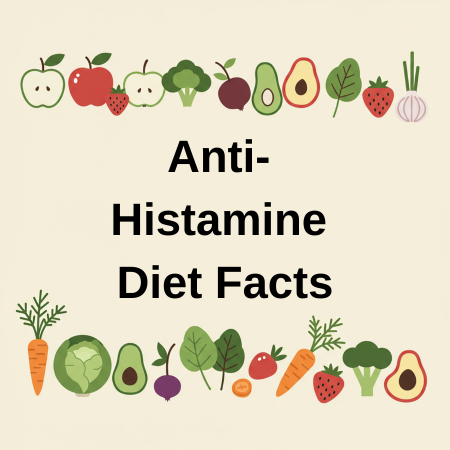
Low Amine & Salicylate Foods:
- Dairy*: Fresh Milk, milk kefir, natural yoghurt, ricotta, fresh mozzarella
- Soy* milk and soybeans
- Coconut and coconut milk
- Fresh meat cooked from scratch
- Fresh seafood*, fresh white fish, fresh oily fish, snap-frozen seafood
- Fresh eggs* – the fresher the better (refrigerate in Summer)
- Freshly picked spinach – histamine increases with storage
- Cooked spinach (reduces histamine content by 83%)
- Cooked broccoli, cooked cauliflower (cooking halves the salicylates)
- Fresh nuts*
- Avocados, green grapes, apples, pears, fresh kiwifruit
- Pumpkin, fresh mushrooms, cucumbers, lettuce, onions, garlic, red capsicums, silverbeet, leeks, potatoes, carrots, bok choy, iceberg lettuce, watercress, asparagus, brussel sprouts, cabbage, beansprouts, radishes
- Millet, wheat* bread, wheat* flour and pasta, rye, barley
- Olive oil, rapeseed oil (canola oil)
- Chamomile tea
*Will increase histamine significantly in those who are allergic to this food
Most prevalent food allergies in people with Atopic Dermatitis (eczema):
- Toddlers and young children – eggs, soy, cow's milk dairy products, and peanuts
- Older children - fish, tree nuts, wheat, and shellfish
- Adults – Some of the above food allergies may persist into adulthood but food intolerances are more common in adults. Dairy, wheat, gluten, eggs and soy commonly come up in IgG food intolerance testing
(Mehta & Fulmali, 2022)
While we need to be aware of what foods might be contributing to inflammation, it shouldn't be hard to nourish our bodies. Any restrictive diet to correct an imbalance should be short-term unless a true allergy is identified.
At Auckland Skin Clinic we first help people to identify their allergies – through consultation, examination and testing where necessary. We then utilise herbal, supplemental, and nutritional medicine to help clear excess histamine from the body and address any other triggers specific to the case.
References
Hrubisko M, Danis R, Huorka M, Wawruch M. Histamine Intolerance-The More We Know the Less We Know. A Review. Nutrients. 2021 Jun 29;13(7):2228. doi: 10.3390/nu13072228. PMID: 34209583; PMCID: PMC8308327.
Mehta Y, Fulmali DG. Relationship Between Atopic Dermatitis and Food Allergy in Children. Cureus. 2022 Dec 31;14(12):e33160. doi: 10.7759/cureus.33160. PMID: 36726939; PMCID: PMC9886409.
Ministry of Health. 20221. Adults’ Dietary Habits – Findings from the 2018/19 and 2019/20 New Zealand Health Survey. Wellington: Ministry of Health.
Ministry of Health. 20222. Children’s Dietary Habits – Findings from the 2018/19 and 2019/20 New Zealand Health Survey. Wellington: Ministry of Health.
Paulina K. Kęszycka, Michał Szkop, and Danuta Gajewska. Overall Content of Salicylic Acid and Salicylates in Food Available on the European Market. Journal of Agricultural and Food Chemistry 2017 65 (50), 11085-11091. DOI: 10.1021/acs.jafc.7b04313
Sánchez-Pérez S, Comas-Basté O, Veciana-Nogués MT, Latorre-Moratalla ML, Vidal-Carou MC. Low-Histamine Diets: Is the Exclusion of Foods Justified by Their Histamine Content? Nutrients. 2021 Apr 21;13(5):1395. doi: 10.3390/nu13051395. PMID: 33919293; PMCID: PMC8143338.